 SPACE
01
Launch, reconsidered.
Explore balloon-assisted launch architecture, mission feasibility, and the path toward low Earth orbit.
Understand the approach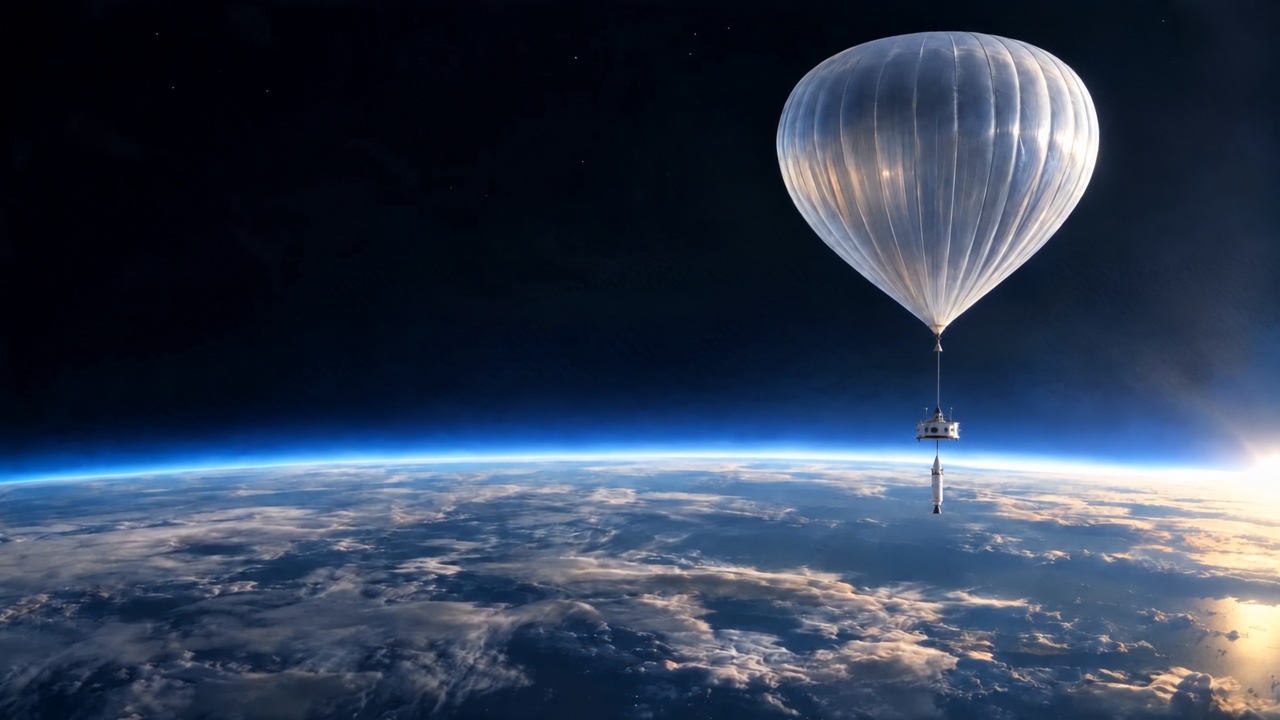
An animated concept shows a balloon lifting a rocket into the stratosphere. The rocket separates before ignition and its main engine fires from the bottom for powered flight toward Earth orbit. A solar-electric transfer stage would provide low thrust for a gradual path toward the Moon. In the lunar scene, a single solar-panel mothership stays in orbit while the Oberth spherical lander, a separate self-propelled spherical rover/lunar lander with flush solar patches, a cyan stripe, and sensors, rolls laterally across the Moon in continuous ground contact, leaving a smooth shallow regolith trail.
Balloon-assisted launch toward Earth orbit.
Solar-electric ion propulsion beyond it.
A stratospheric rocket launch combines two flight systems: a high-altitude balloon lifts a rocket into the stratosphere, then powered flight takes over. Our concept program explores this approach for small-payload missions, with a solar-electric transfer stage extending the architecture beyond Earth orbit.
Explore balloon-assisted launch architecture, mission feasibility, and the path toward low Earth orbit.
Understand the approachShape the mission around payload interfaces, environment, deployment needs, and scientific objectives.
Find your mission profileExplore a solar-electric ion transfer toward lunar missions, after a suitable rocket completes Earth-orbit insertion.
Explore Moon accessA high-altitude balloon lifts the rocket and payload through the lower atmosphere. The ascent is unpowered by rocket propulsion; tracking and weather remain central to the flight plan.
BALLOON-ASSISTED / UNPOWERED ROCKETAt the planned release point, the rocket separates safely from its carrier before ignition. Once clear, ignition and guidance begin the powered portion of the mission.
SAFE SEPARATION / IGNITION AFTER CLEARANCEA suitable chemical rocket would need to insert the payload into its intended Earth orbit. Reaching altitude alone is not orbital flight.
CHEMICAL ROCKET / INTENDED ORBITAL INSERTIONAfter Earth orbit, a solar-electric transfer stage would run low thrust in space. It needs power and builds acceleration gradually across the mission duration rather than providing a rapid launch burn.
LOW-THRUST / POWERED IN SPACEMoon approach and lunar orbit are the objective of this illustrative profile. Navigation, capture, and mission design shape the approach.
LUNAR ORBIT OBJECTIVEMoon access, powered by ions.
After rocket-powered insertion into Earth orbit, a solar-electric transfer stage could use an ion thruster to gradually reshape its trajectory toward the Moon. Solar arrays supply electrical power; the thruster accelerates ionized propellant to provide sustained low thrust.
The ion stage operates after launch and orbital insertion—not during balloon ascent or atmospheric flight.
Low thrust accumulates over a long mission interval. Transfer design, power, navigation, and lunar capture must be evaluated together.
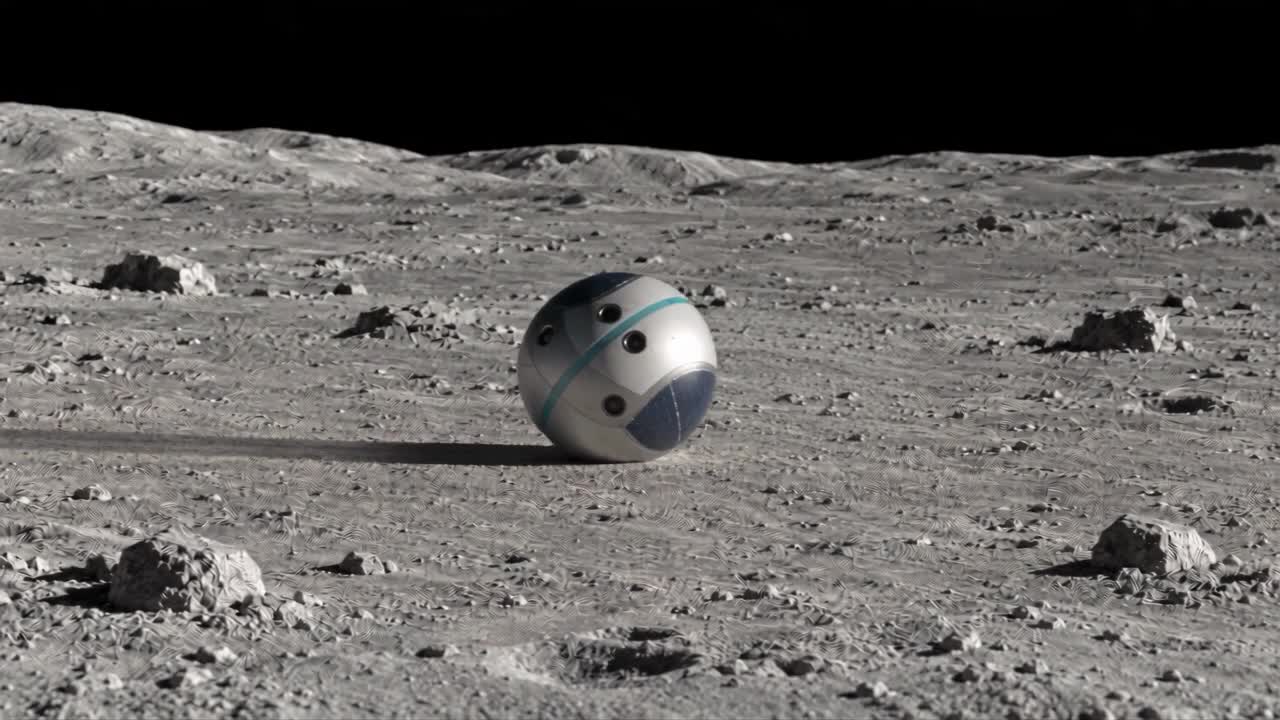
One solar-panel mothership in orbit. The Oberth spherical lander, a separate self-propelled spherical rover/lunar lander, rolls laterally across the Moon in continuous ground contact.
Visual details include flush solar patches, a cyan stripe, sensors, and a smooth shallow regolith trail.
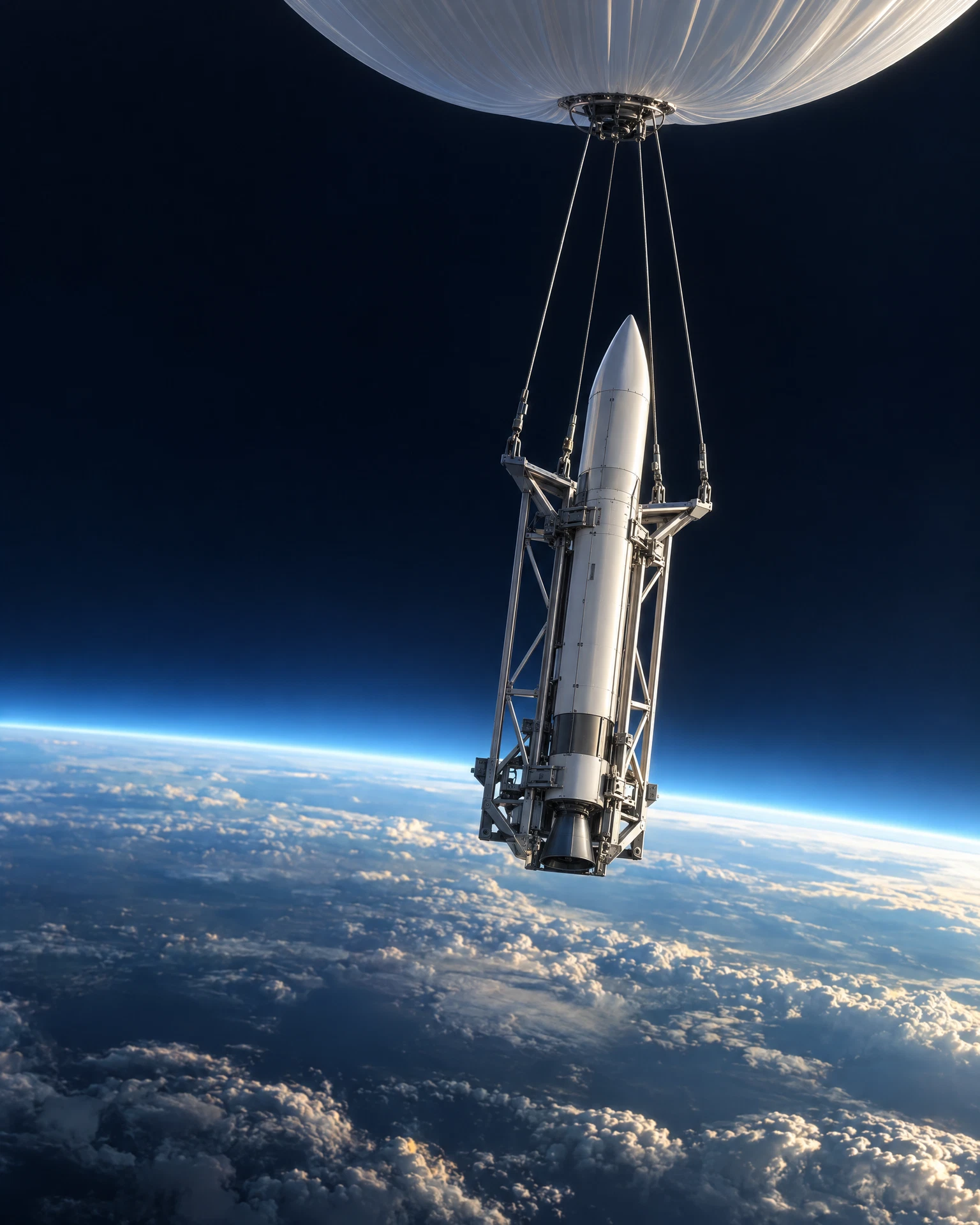 BALLOON + ROCKET CONCEPT VISUALIZATION+
A different launch architecture.
The same respect for the physics.
Balloon ascent carries the vehicle through the lower atmosphere before rocket propulsion begins.
Weather, drift, safe separation, and range clearance shape every flight concept.
Reaching orbit still requires a suitable rocket, guidance, and sufficient orbital velocity.
From Earth-orbit payloads to a lunar ambition, the right starting point is a clear mission brief.
Explore a solar-electric ion-thruster transfer stage after Earth-orbit insertion, with a gradual pathway toward lunar approach or orbit. Payload, power, transfer duration, navigation, and capture requirements shape the transfer design.
Explore launch requirements for compact satellites and CubeSat-class payloads. Orbit, mass, interfaces, and deployment needs define the feasibility study.
Plan atmospheric measurements, remote sensing, and scientific payload experiments. Stratospheric, suborbital, and orbital profiles are evaluated separately.
Define a flight-test pathway for new instruments, communications hardware, and edge-AI systems, with a mission environment tailored to the experiment.
Aitonomi AG is an AI deep tech innovation holding. Aitonomi Space brings that innovation-led perspective to the exploration of new mission and launch concepts.
A meeting point for autonomy, intelligent systems, and the next generation of space infrastructure.
AI DEEP TECH INNOVATION HOLDINGwww.aitonomi.ai

Explore feasibility. Define requirements.
Build a clearer path forward.
Company details
AI deep tech innovation holding